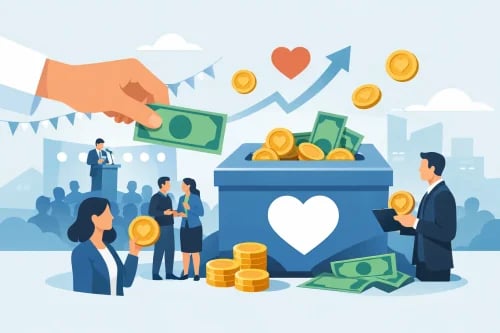
A donation table with a cash box still shows up at plenty of events. It also leaves money on the table. If you want to know how to collect event donations effectively, the real answer is not just asking more often. It is building a donation process that is easy to understand, quick to complete, and available at every point where a guest is ready to give.
That matters whether you are running a gala, community fundraiser, alumni event, cultural celebration, golf outing, or ticketed nonprofit program. Donors do give because they care about the mission, but they also respond to convenience, timing, trust, and clarity. The organizers who raise more are usually the ones who remove friction.
How to collect event donations starts before the event day
The biggest mistake organizers make is treating donations like an event-night add-on. By the time guests arrive, your best donation opportunities should already be in motion.
Start with your registration and ticketing flow. If someone is already signing up, buying a ticket, or reserving a table, that is a natural moment to present a donation ask. Keep it simple. State the purpose, offer clear giving amounts, and include an option for a custom donation. When the ask is built into checkout, donors do not need to search for a separate page or wait for another email.
Pre-event donation pages also work well when they are tied to a specific goal. General fundraising language can feel vague. A cleaner message, such as funding scholarships, underwriting youth programming, or supporting the event’s community impact, gives donors a reason to act now rather than later.
This is also the stage where platform choice matters. If your registration, ticketing, and donations live in separate systems, the experience gets harder to manage and easier for guests to abandon. A unified setup gives organizers better control over branding, attendee data, payment flow, and reporting. It also reduces the back-office work that piles up after the event.
Set the donation ask before you promote the event
Your campaign should answer three questions before the first invite goes out: what you are raising money for, when you will ask, and how guests can give. If those details are unclear internally, they will be even less clear to attendees.
Map your donation asks across the event timeline. For example, one ask may occur during ticket purchase, another in reminder emails, another on stage, and another in the post-event follow-up. The amount and message may change at each step, but the giving process should stay consistent.
Make giving easy in more than one format
If you are serious about collecting event donations, you need to support the way people actually pay now. Some guests still prefer traditional methods, but many expect digital options that work in seconds on their phones.
That usually means offering online donations before the event, mobile-friendly giving during the event, and on-site card acceptance. QR codes can be useful when placed strategically, but they are not enough on their own. If the code results in a slow page, a confusing form, or too many fields, conversion drops quickly.
In-person events benefit from having both passive and active donation channels. Passive channels include donation prompts on event pages, signage, and mobile giving options available throughout the venue. Active channels include live appeals, pledge moments, auction bidding, raffle participation, and direct asks from hosts or ambassadors.
Virtual and hybrid events need the same discipline. The channel changes, but the rule does not. Viewers should be able to donate without leaving the experience or getting lost in a separate process.
The best donation flow is short and specific
Long forms hurt donation volume. Ask only for the information you truly need. If you already have attendee details from registration, use that advantage instead of making donors enter everything again.
Suggested donation amounts can increase conversions, especially when paired with a brief explanation of impact. But there is a trade-off. Too many options create hesitation. Three or four strong choices plus a custom field is usually more effective than presenting a long list.
The payment experience also needs to inspire trust. Clean branding, secure payment handling, and immediate confirmation all matter. Donors should know their transaction went through and where their money is going.
Match the donation method to the event type
Not every event should collect donations the same way. A 5K, a church banquet, and a reserved-seat gala all have different donor behavior.
A community event with lower ticket prices may do well with simple add-on donations at checkout and an on-site mobile giving prompt. A fundraising gala usually needs layered tactics, including sponsorships, table sales, auction revenue, paddle raises, and direct donation appeals from the stage. A cultural festival may rely more heavily on peer sharing, QR-based giving, and visible mission messaging throughout the event footprint.
This is where organizers sometimes overcomplicate things. More fundraising features are not always better if the audience will not use them. The best approach is the one your guests can understand immediately and complete without help.
If your event includes auctions or raffles, those can create strong fundraising momentum, but they should complement direct donations, not replace them. Some attendees want to compete for an item. Others simply want to give. Make room for both.
Timing affects how much you raise
A well-timed ask can outperform a stronger message delivered at the wrong moment. Guests are most responsive when the request feels connected to their experience and is not interruptive.
Before the event, use confirmation emails, reminder messages, and pre-event updates to introduce the mission and invite early support. During the event, place donation moments where energy is naturally high. That could be after a beneficiary story, during a live fundraising segment, or at the close of a program when guests are already engaged.
After the event, follow up quickly. Many organizers stop asking once the room is cleared, but post-event donations can be significant, especially from guests who needed more time or were moved by their experience. Your follow-up should thank attendees first, then give them one clear opportunity to contribute.
Use urgency carefully
Deadlines and live fundraising goals can motivate action, but they need to feel real. A visible thermometer, matching gift period, or campaign total can encourage donations when used honestly.
What does not work well is manufactured urgency with no context. Donors can tell when pressure replaces substance. Keep the appeal grounded in impact and relevance.
Train your event around the donation experience
Even the best donation tools underperform if your staff, volunteers, or hosts do not know how giving works. If a guest asks where to donate, how to check out from an auction, or whether they can pay by card, the answer should be immediate.
That means testing every donation path before the event day. Run through checkout. Scan the QR codes. Process a sample mobile donation. Confirm what receipts look like. Verify who is monitoring incoming gifts and who can assist guests on-site.
Operational discipline matters here. Donation collection is part of event execution, not a separate activity. The smoother it runs, the more credible your organization feels to donors.
This is one reason many organizers prefer a single platform for ticketing, registration, fundraising, and event-day operations. When attendee records, payments, auctions, and donations are connected, there is less confusion for staff and less friction for guests. Ticket Falcon is built for that kind of control, especially for teams that need both fundraising capabilities and reliable event execution in a single system.
Track what worked so the next event performs better
If you are learning how to collect event donations, measurement is what turns one successful event into a repeatable process. Look beyond the total raised. You need to know where donations came from, when they happened, and which asks converted.
Compare pre-event donations to event-night giving. Review average donation amounts by channel. Look at whether your checkout add-on worked, whether your live appeal drove action, and whether follow-up emails generated additional gifts. These details help you decide what to keep, what to simplify, and what to stop doing.
It also helps to separate donation behavior from ticket sales behavior. A sold-out event does not automatically mean a strong fundraising outcome. If attendance was high but giving was light, the issue may be message clarity, ask timing, or payment friction rather than audience interest.
The strongest organizers treat each event like a system they can improve. They tighten the registration flow, shorten the donation path, better train the team, and make the next ask more precise.
Collecting more event donations is rarely about one big trick. It is about reducing hesitation at every step. When donors understand the purpose, trust the process, and can give without effort, generosity has room to happen.